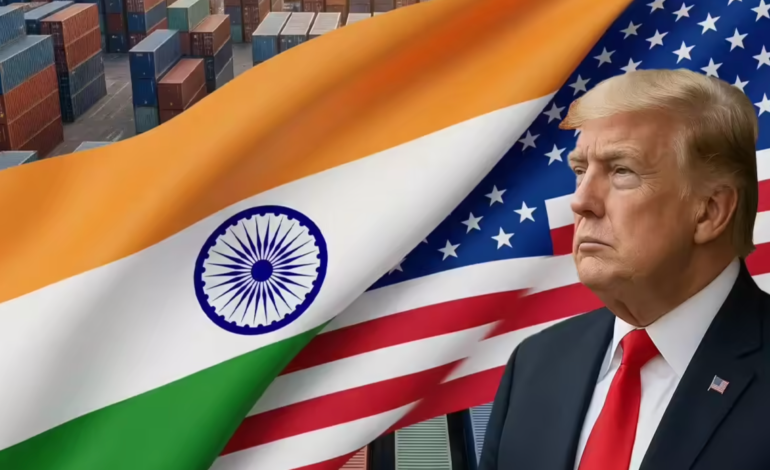
India may gain $10–12 billion as US processes Trump tariff refunds

India could potentially benefit from a massive tariff refund process underway in the United States following a landmark ruling by the US Supreme Court that struck down tariffs imposed during the administration of Donald Trump. According to estimates, goods linked to India may account for nearly $10–12 billion of the total refund pool, which exceeds $166 billion.
The tariffs, introduced under emergency powers, had targeted a wide range of imports, including textiles, engineering goods, and chemicals from India. However, the court’s decision earlier this year declared these measures unconstitutional, effectively invalidating them and triggering one of the largest refund exercises in U.S. trade history.
To facilitate the process, U.S. Customs and Border Protection has launched a new digital system called CAPE (Consolidated Administration and Processing of Entries). The platform, which went live on April 20, allows importers and customs brokers to file bulk refund claims, streamlining what would otherwise be a complex and time-consuming process.
Despite the significant sum linked to Indian goods, the situation is not straightforward for Indian exporters. Legally, only U.S.-based importers—those who originally paid the tariffs—are eligible to claim refunds. This means that while Indian exports are tied to billions of dollars in potential reimbursements, the funds will initially flow to American companies rather than directly to Indian firms.
Experts suggest that Indian exporters will need to adopt strategic approaches to benefit from this development. One likely path is negotiating rebate-sharing agreements with U.S. buyers, allowing exporters to recover a portion of the refunded duties. Another approach could involve renegotiating past contracts where tariff costs were factored into pricing, potentially improving margins.
The refund potential is concentrated in key sectors that were heavily impacted by the tariffs. Textiles and apparel, along with engineering goods, are expected to account for around $4 billion each, while chemicals and related products may contribute an additional $2 billion. These sectors, which employ large workforces, stand to gain significantly if exporters can secure a share of the refunds.
The broader implications for India’s trade outlook are substantial. If leveraged effectively, this development could restore competitiveness for Indian goods in the U.S. market and support future export growth. However, success will depend largely on how proactively Indian companies engage with their American counterparts.
As the refund process unfolds over the coming months, businesses on both sides will be watching closely. For India, this moment represents not just a financial opportunity, but a chance to recalibrate trade relationships and strengthen its position in one of its most important export markets.