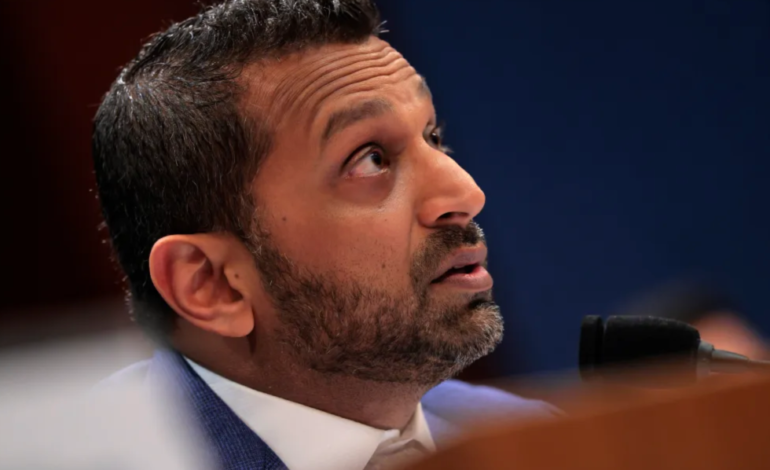
FBI Director Kash Patel sues The Atlantic for $250 million in defamation case

Kash Patel has filed a $250 million defamation lawsuit against The Atlantic and one of its journalists, intensifying a high-profile legal battle over media accountability and press freedom in the United States.
The lawsuit, filed in the U.S. District Court for the District of Columbia, accuses the publication and staff writer Sarah Fitzpatrick of publishing what Patel describes as a “malicious and defamatory hit piece.” The article in question reportedly included allegations of excessive drinking and unexplained absences during his tenure as Director of the Federal Bureau of Investigation.
Patel’s legal complaint strongly denies these claims, asserting that the report relied on anonymous sources and contained “false and fabricated allegations” aimed at damaging his reputation and forcing him out of office. The filing argues that several specific incidents cited in the article—such as disrupted meetings and unusual security requests—are entirely untrue.
Central to the case is the legal concept of “actual malice,” a standard established in the landmark New York Times v. Sullivan ruling. Under this precedent, public officials must prove that a publication knowingly published false information or acted with reckless disregard for the truth. Patel’s lawsuit claims that the article meets this threshold, alleging that the statements were either demonstrably false or easily verifiable.
Patel’s attorney, Jesse Binnall, emphasized that the case is about holding media organizations accountable for false reporting, stating that “defamatory speech is not free speech.” The lawsuit seeks substantial damages, along with other legal remedies.
In response, The Atlantic has firmly defended its reporting. A spokesperson for the publication said it stands by the article and intends to “vigorously defend” both the organization and its journalists, dismissing the lawsuit as meritless.
The controversy comes amid broader scrutiny of Patel’s leadership at the FBI. Reports cited by other media outlets have referenced an online petition calling for an investigation into his conduct, although these claims remain unverified independently. Patel has dismissed such allegations, maintaining that critics are relying on biased or uninformed sources.
This is not Patel’s first legal action against media organizations since assuming office in February 2025. The current case marks at least his second defamation lawsuit, reflecting an increasingly confrontational stance toward critical coverage.
As the case proceeds through federal court in Washington, it is expected to draw significant attention, potentially testing the boundaries between press freedom and reputational protection for public officials in the United States.