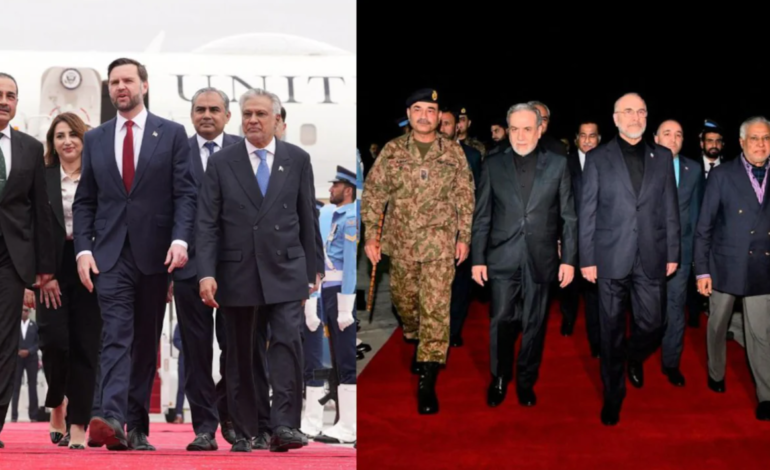
US, Iran hold second round of talks in Pakistan amid fragile ceasefire tensions

The United States and Iran are set to hold a second round of high-stakes talks in Pakistan on Saturday, as a fragile ceasefire in the Middle East continues to hold amid deep mistrust and unresolved disputes.
The discussions come nearly two weeks after the first round of negotiations in Islamabad on April 11–12 failed to produce a breakthrough. Despite diplomatic engagement, both sides remain divided on key issues, including Iran’s nuclear program, regional security concerns, and the status of the Strait of Hormuz.
US President Donald Trump has deputed senior envoys Steve Witkoff and Jared Kushner to represent Washington, signaling the administration’s continued push for a negotiated outcome. Iran, meanwhile, is being represented by its Foreign Minister Abbas Araghchi, according to state media reports.
While the White House has described the engagement as an “in-person conversation” aimed at moving toward a potential agreement, Iranian officials have downplayed expectations, indicating that formal direct negotiations may not yet be on the table.
At the heart of the discussions are three contentious issues: Iran’s highly enriched uranium (HEU) stockpile and nuclear ambitions, the reopening and security of the Strait of Hormuz, and the broader regional conflict involving Israel and Iran-backed groups in Lebanon.
The previous round of talks reportedly collapsed after nearly 21 hours of deliberations failed to bridge differences. US officials have maintained that Iran’s nuclear infrastructure has been significantly degraded, but concerns persist over Tehran’s willingness to halt future weapons development. Iran, for its part, continues to assert its right to enrich uranium, though it has indicated some flexibility on limits.
Pakistan has emerged as a key intermediary in the ongoing crisis, leveraging its diplomatic ties with Washington, Tehran, and Gulf nations to facilitate dialogue. The current talks mark one of the most significant diplomatic engagements between the US and Iran since the 1979 Islamic Revolution.
Despite the ceasefire extension earlier this week, tensions remain high. Iran has effectively restricted shipping through the Strait of Hormuz, disrupting global energy flows, while the US has intensified its military presence in the region, including deploying additional naval assets.
With both sides holding firm on core demands, the outcome of the latest talks remains uncertain. Analysts warn that without tangible progress, the region risks sliding back toward escalation, with global economic and security implications.