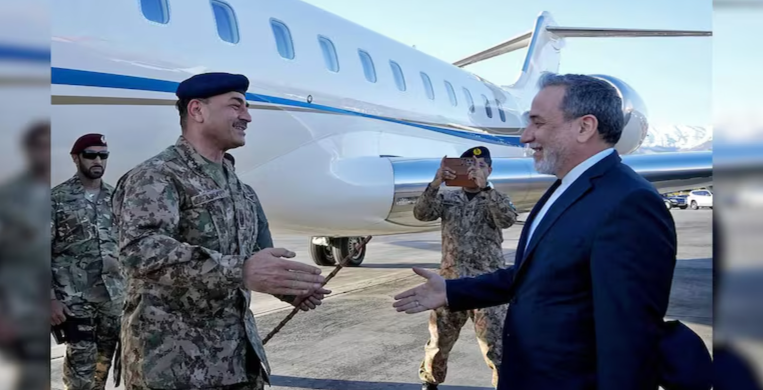
Asim Munir arrives in Iran with US peace proposal after talks collapse in Islamabad

Asim Munir has arrived in Iran carrying a peace proposal backed by Donald Trump, as efforts intensify to revive negotiations following the collapse of US-Iran talks in Islamabad.
Munir, accompanied by senior officials including Interior Minister Mohsin Naqvi, was received in Tehran by Iranian Foreign Minister Abbas Araghchi. The visit is part of Pakistan’s ongoing diplomatic push to mediate between Washington and Tehran amid a fragile ceasefire.
Pakistan has emerged as a key intermediary in the crisis, leveraging its ties with multiple stakeholders, including the United States, Iran, Gulf nations, and China. Prime Minister Shehbaz Sharif has also been actively involved in the mediation process.
Both sides have acknowledged Islamabad’s role in keeping communication channels open even after the breakdown of talks. Iranian officials confirmed that messages have continued to flow between Tehran and Washington through Pakistan, while the White House has publicly appreciated Islamabad’s efforts to facilitate dialogue.
The earlier negotiations in Islamabad failed after prolonged discussions, reportedly due to disagreements on three core issues: Iran’s uranium enrichment programme, the reopening of the Strait of Hormuz, and the broader regional conflict, particularly tensions involving Israel and Lebanon.
Iran has maintained that its right to peaceful nuclear energy is non-negotiable, though it has indicated some flexibility on enrichment levels. On the maritime front, Tehran has signaled it may allow limited passage through parts of the Strait of Hormuz under certain conditions, but only within a broader agreement framework.
Meanwhile, the United States continues to push for long-term guarantees that Iran will not develop nuclear weapons, a demand that remains a major sticking point. The impasse has kept tensions high, even as both sides express willingness to continue talks.
Munir’s visit is seen as an attempt to bridge these gaps and prevent a collapse of the fragile ceasefire, which is set to expire soon. Diplomatic sources suggest that another round of negotiations could take place in Islamabad if progress is made.
As the situation evolves, Pakistan’s role as a mediator has become increasingly significant, positioning it at the center of one of the most complex geopolitical crises currently unfolding. The success of these efforts, however, will depend on whether both sides are willing to compromise on their core demands.