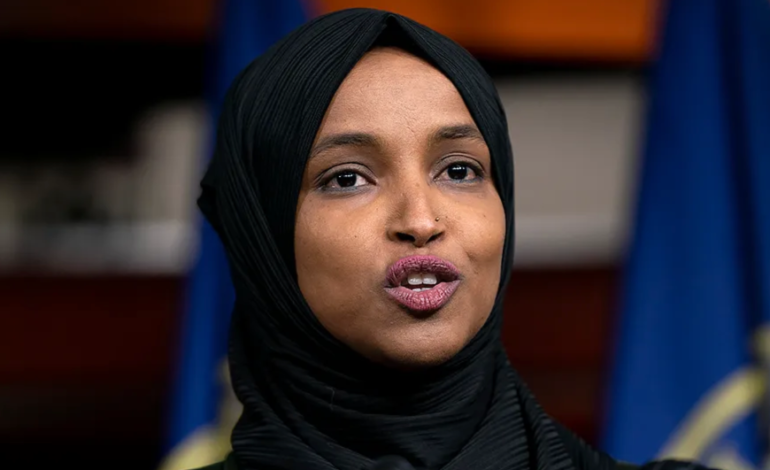
“India has reached the 8th stage of genocide”: U.S. Congresswoman Ilhan Omar sparks controversy with remarks on India

Comments made by U.S. Congresswoman Ilhan Omar regarding India have triggered a fresh political controversy, drawing criticism from several quarters and reigniting debate over international commentary on India’s internal affairs.
During a discussion focused on issues affecting Muslim communities, Omar referred to reports alleging discrimination against minorities in India and claimed that the country was entering what she described as the “eighth stage of genocide.” The remarks quickly attracted attention on social media and among political observers in both the United States and India.
Critics strongly rejected the characterization, arguing that the statement was inaccurate, inflammatory, and failed to reflect the complexity of India’s social and political landscape. Opponents accused Omar of relying on contested narratives and making broad claims that could further polarize discussions surrounding religious and human rights issues.
Supporters of the Congresswoman, however, defended her comments as part of a broader conversation about minority rights and democratic accountability. They argued that elected officials should be able to raise concerns regarding human rights issues wherever they occur.
The controversy has once again highlighted the sensitivity surrounding international political commentary on India. Similar remarks by foreign politicians and advocacy groups have, in the past, prompted strong reactions from Indian officials, community organizations, and diaspora groups.
Political analysts note that statements involving India’s domestic affairs often generate significant diplomatic and public debate due to the country’s growing geopolitical importance and its status as the world’s largest democracy.
As reactions continue to emerge, Omar’s remarks are expected to remain part of wider discussions about free speech, human rights advocacy, international diplomacy, and the role of foreign lawmakers in commenting on the internal matters of sovereign nations.
The episode underscores the increasingly global nature of political discourse and the scrutiny that accompanies statements made by prominent public officials on sensitive international issues.