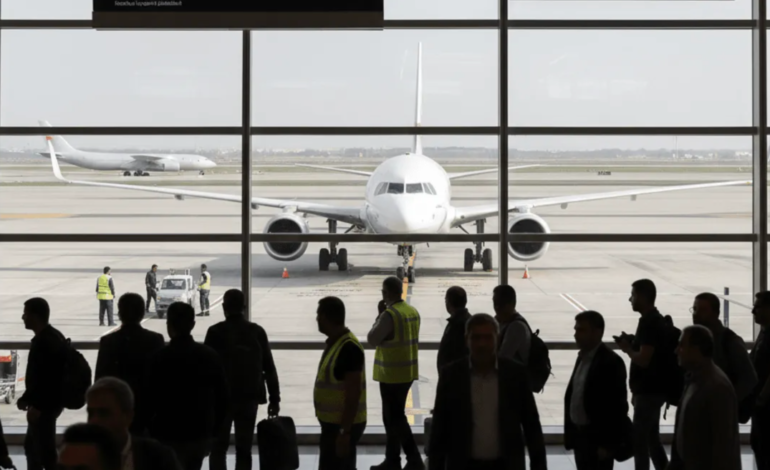
Tehran airport reopens as US–Iran ceasefire allows gradual return of international flights

International flights have begun resuming at Imam Khomeini International Airport in Tehran, marking a significant step toward restoring normalcy after weeks of disruption caused by the conflict involving the United States and Israel.
The reopening comes amid a fragile ceasefire between Iran and United States, which has temporarily halted active hostilities and allowed limited civilian activity to resume. Flights departing from Tehran have included routes to regional destinations such as Istanbul, Muscat, and Medina, signaling a cautious but important restart of international connectivity.
Iran’s airspace had remained largely closed for nearly two months following the outbreak of conflict, severely impacting global aviation routes and leaving thousands of travelers stranded. The shutdown also disrupted one of the world’s busiest air corridors, forcing airlines to reroute flights and contributing to rising operational costs.
Officials indicated that the reopening will be gradual and closely tied to evolving security conditions. Initial operations are expected to focus on safer eastern corridors, while routes over more volatile regions will resume only after further assessment.
Domestic flights have also restarted in phases, with authorities prioritizing essential connectivity and repatriation efforts. Iran’s aviation officials have confirmed ongoing coordination with international carriers to reestablish broader flight networks in the coming weeks.
Despite the resumption of flights, the situation remains tense. Key flashpoints, including maritime tensions in the Strait of Hormuz and ongoing geopolitical rivalries, continue to cast uncertainty over the durability of the ceasefire. Analysts warn that any escalation could once again disrupt air travel and regional stability.
The reopening of Tehran’s airport is being viewed as a symbolic indicator of de-escalation, even as diplomatic efforts continue behind the scenes. Talks between U.S. and Iranian representatives are ongoing, with mediators working to transform the temporary ceasefire into a more durable agreement.
For now, the return of flights offers a limited but tangible sign of recovery for travelers and the aviation industry, which has been significantly affected by the conflict. However, officials remain cautious, emphasizing that the path to full normalization will depend on sustained stability and progress in diplomatic negotiations.