Trump says Hormuz open but Iran blockade persists amid fragile ceasefire

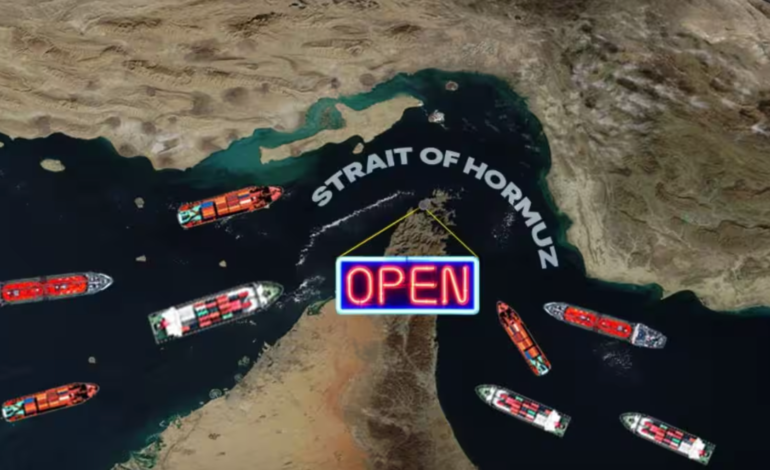
The Strait of Hormuz has been declared open for commercial shipping during a fragile ceasefire in the Middle East, offering temporary relief to global markets even as underlying tensions remain unresolved. While Iran announced that vessels can pass freely through the critical waterway, the United States has made it clear that its targeted naval blockade on Iran will continue, highlighting the conditional nature of the current stability.
Iran’s Foreign Minister Seyed Abbas Araghchi stated that the passage through the Strait of Hormuz is “completely open” for commercial vessels for the duration of the ceasefire. The move was linked to a truce between Israel and Lebanon, suggesting a broader effort to ease regional tensions and restore confidence in global shipping routes. The announcement triggered an immediate response in financial markets, with oil prices dropping and equities rising on expectations of improved supply flows.
However, US President Donald Trump signalled a more cautious approach. While confirming that the strait is open for business, he emphasized that the naval blockade targeting Iran would remain in force until a comprehensive agreement is reached. The US position reflects a dual strategy — allowing global commerce to resume while maintaining pressure on Tehran to secure concessions in ongoing negotiations.
The scale of the US military presence underscores the seriousness of this approach. Officials have indicated that thousands of personnel, multiple naval vessels, and aircraft remain deployed in the region to enforce the blockade and monitor maritime activity. Despite the reopening, shipping movements are still subject to coordination and oversight, suggesting that full normalcy has yet to return.
Analysts caution that the reopening of the Strait of Hormuz may be more symbolic than absolute. The continued military presence and controlled shipping routes indicate that risks remain elevated. Any miscalculation or violation of the ceasefire could quickly disrupt the fragile balance currently in place.
Diplomatic efforts are continuing alongside military measures. The United States has expressed optimism about reaching a deal with Iran, with discussions potentially moving to new venues in the coming days. The outcome of these talks will be critical in determining whether the current reprieve evolves into a lasting resolution.
As one of the world’s most important energy corridors — responsible for a significant share of global oil and gas transit — the Strait of Hormuz remains central to global economic stability. While the current reopening offers short-term relief, uncertainty over enforcement, security, and diplomacy continues to cast a shadow over international markets.