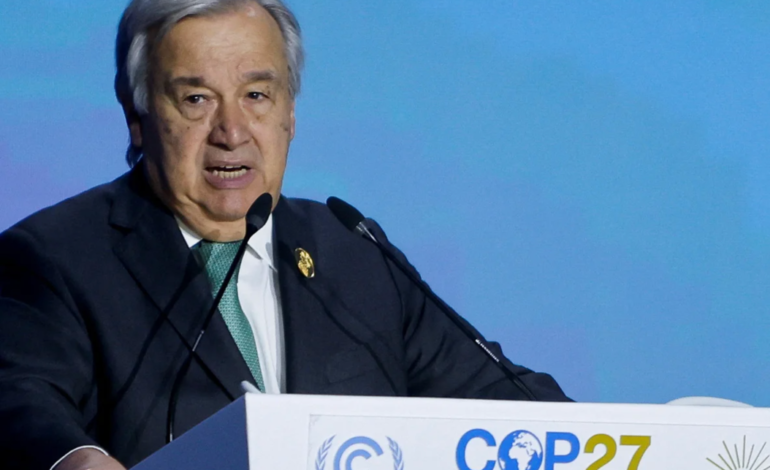
Any restart of fighting would have terrible consequences: UN chief Guterres

United Nations Secretary-General Antonio Guterres on Monday issued a strong appeal for continued diplomacy and restraint in the Gulf region, warning that any return to fighting could trigger severe global economic and humanitarian consequences.
Speaking during a groundbreaking ceremony for a new conference facility at the United Nations office in Nairobi, Kenya, Guterres stressed the urgent need to preserve the existing ceasefire and ensure that the strategically critical Strait of Hormuz remains fully open to international shipping.
“My strong appeal is for the negotiations to go on until that diplomatic solution is found, the ceasefire to be maintained, and in between, the Strait of Hormuz to be completely open,” Guterres said. “Any restart of the fighting would have terrible consequences.”
The UN chief emphasized that the crisis in the Middle East extends far beyond the immediate region and poses serious risks for countries across Africa and the global economy. He noted that approximately 13 percent of Africa’s imports pass through the Strait of Hormuz, making uninterrupted maritime movement essential for economic stability and food security.
Guterres warned that many African nations are still awaiting shipments of fertilizers and agricultural supplies from Gulf countries. Disruptions caused by regional instability, he said, could have devastating long-term consequences for farming and food production.
“Without fertilizers, you can imagine that we risk having a serious food security problem next year,” he explained.
According to the UN chief, the price of urea — the world’s most widely used fertilizer — has already increased by more than 35 percent in just one month amid growing tensions in the Gulf region.
Guterres underlined that keeping the Strait of Hormuz open is vital not only for global energy supplies but also for stabilizing international commodity prices.
“That is the only way to bring energy prices and fertilizer prices back to the levels that we had before the war,” he said.
His remarks came amid renewed tensions between the United States and Iran following Tehran’s response to a new U.S.-backed peace proposal aimed at ending the conflict and restoring maritime security in the Gulf.
Earlier Monday, U.S. President Donald Trump sharply criticized Iran’s response to the proposal, describing Tehran’s position as “TOTALLY UNACCEPTABLE” in a post on Truth Social.
The latest diplomatic friction has intensified concerns over the future of regional stability, global oil markets, and international shipping routes as world leaders continue efforts to prevent a broader escalation in the Middle East.