After US-Iran talks fail, China proposes four-point plan for Middle East peace

Following the collapse of recent negotiations between the United States and Iran, China has stepped forward with a four-point proposal aimed at promoting peace and stability across the Middle East, signaling a growing diplomatic role in the region.
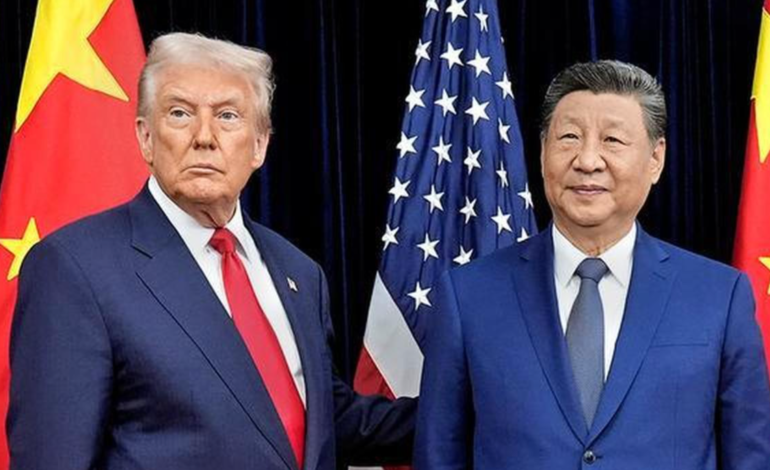
The proposal was put forward by Chinese President Xi Jinping during a high-level meeting in Beijing, as tensions continue to escalate after failed talks in Islamabad and ongoing military and economic pressure in the region.
According to official statements, China’s four-point plan focuses on key principles designed to address both immediate conflict and long-term stability. The first pillar emphasizes peaceful coexistence, urging all parties to resolve disputes through dialogue rather than confrontation. The second calls for strict respect for national sovereignty, reinforcing the idea that external interference should be avoided in resolving regional issues.
The third component highlights the need to balance development and security, suggesting that sustainable peace can only be achieved if economic stability and security concerns are addressed together. The fourth and final point stresses adherence to international law and a rules-based global order, warning against selective application of global norms.
China’s initiative comes at a time when traditional diplomatic efforts led by Western powers have struggled to produce results. The recent breakdown of US-Iran talks has further deepened uncertainty, while ongoing disruptions in critical areas like the Strait of Hormuz continue to impact global energy markets and economic stability.
Beijing has positioned itself as a proponent of dialogue and multilateralism, calling for a comprehensive and cooperative security framework for the region. Chinese officials have also reiterated their opposition to unilateral actions and military escalation, advocating instead for inclusive negotiations involving all stakeholders.
The move reflects China’s broader ambition to expand its influence in global conflict resolution, particularly in regions where it has strong economic interests, including energy imports and infrastructure investments.
However, analysts note that while the proposal outlines broad principles, its effectiveness will depend on the willingness of key players—including the United States, Iran, and regional actors—to engage constructively. With deep-rooted rivalries and conflicting strategic objectives, translating these principles into actionable agreements remains a significant challenge.
As tensions persist, China’s four-point plan adds a new dimension to diplomatic efforts, highlighting shifting global power dynamics and the increasing role of alternative mediators in addressing complex international conflicts.