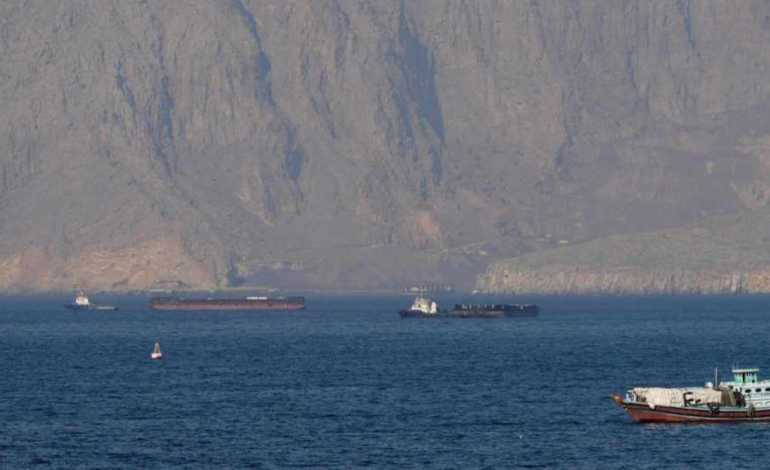
India protests after ships come under fire in Strait of Hormuz

India has lodged a strong diplomatic protest after two India-flagged ships came under fire in the Strait of Hormuz, escalating concerns over maritime security in one of the world’s most critical energy corridors.
The Ministry of External Affairs on Saturday summoned Iranian envoy Mohammad Fathali following the incident, seeking an explanation and urging Tehran to ensure the safe passage of India-bound vessels. During the meeting, Foreign Secretary Vikram Misri conveyed New Delhi’s deep concern over the firing on merchant ships and emphasized the importance of maritime safety.
In its official statement, the MEA highlighted that Iran had previously facilitated safe passage for Indian vessels and called for the immediate resumption of such cooperation. The Iranian envoy assured Indian authorities that the concerns would be conveyed to Tehran.
The escalation comes amid renewed restrictions imposed by Iran on the Strait of Hormuz, shortly after a brief reopening during a fragile ceasefire period. Tehran has accused the United States of violating understandings related to the ceasefire by continuing its naval blockade on Iranian ports.
The incident involved two India-flagged vessels, Sanmar Herald and Jag Arnav, reportedly carrying nearly 2 million barrels of Iraqi crude oil. The ships were transiting the strait when gunshots were reported, forcing them to reverse course. While no injuries were reported and both vessels are safe, the episode underscores the growing risks for commercial shipping in the region.
According to the United Kingdom Maritime Trade Operations, gunboats linked to Iran’s Islamic Revolutionary Guard Corps opened fire near a tanker navigating the strait. Shipping intelligence firm TankerTrackers.com also reported that multiple vessels, including an Indian supertanker, altered their routes following the incident.
The disruption extended beyond Indian ships, with reports indicating that other merchant vessels, including Greek tankers, were forced to turn back amid safety concerns. The situation reflects a broader deterioration in maritime security as tensions between Iran and the United States intensify.
The Strait of Hormuz handles a significant portion of global oil shipments, making any instability in the region a matter of global economic concern. For India, which relies heavily on crude imports from the Gulf, the safety of shipping routes is critical to energy security.
As diplomatic channels remain active, the incident highlights the fragile balance between geopolitical tensions and the uninterrupted flow of global trade through one of the world’s most vital waterways.