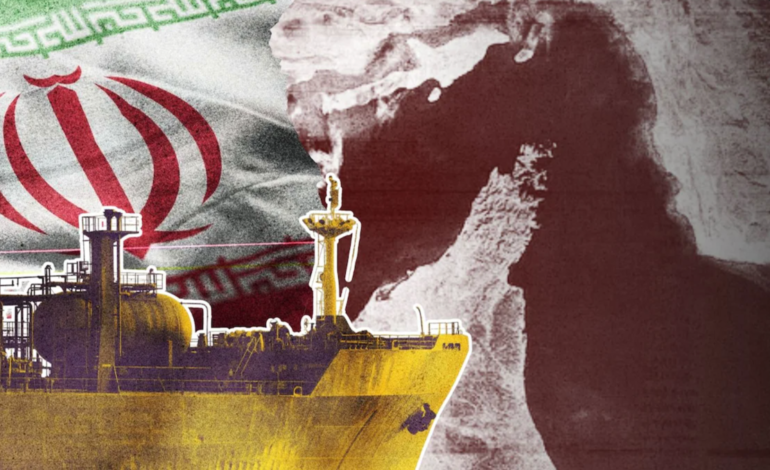
Iran faces $435 million daily loss amid US Hormuz blockade

Iran could suffer economic losses of up to $435 million per day following a United States-imposed blockade targeting its key export routes through the Strait of Hormuz, according to recent estimates cited by analysts.
The blockade, announced by US President Donald Trump, is aimed at curbing Iran’s oil exports and intensifying pressure on Tehran amid ongoing tensions over its nuclear programme. The move represents a significant escalation, shifting from diplomatic engagement to direct economic containment.
Experts estimate that the bulk of Iran’s projected losses—approximately $276 million daily—would come from reduced crude oil and petrochemical exports. The country typically exports around 1.5 million barrels of oil per day, much of it routed through Kharg Island, a major terminal within the Persian Gulf. Disruptions at this chokepoint could severely restrict Iran’s primary source of revenue.
However, analysts caution that the actual economic impact will depend on several variables, including the effectiveness of enforcement and Iran’s ability to reroute shipments. Tehran has already explored alternative export pathways, such as the Jask terminal, which lies outside the Strait of Hormuz and could partially mitigate losses.
In the short term, Iran may also rely on oil already in transit. Data suggests that as of late March, nearly 154 million barrels of Iranian oil were stored in floating tankers outside the immediate blockade zone, providing temporary financial cushioning.
The strategic objective of the blockade is to weaken Iran’s economy by targeting its energy-dependent cash flow. By restricting exports, Washington aims to force Tehran back to the negotiating table under increased economic strain. Some analysts argue that the blockade could achieve effects similar to a direct military operation against critical infrastructure, but with reduced risk of escalation involving ground forces.
Enforcing the blockade, however, presents considerable challenges. The Strait of Hormuz handles nearly 20 percent of global oil trade, making it one of the busiest and most strategically sensitive maritime routes in the world. Monitoring and restricting traffic at such scale would require sustained deployment of US naval assets and cooperation from allied forces.
The unfolding situation has significant global implications. Any prolonged disruption in the Strait could tighten energy supplies, increase prices, and heighten economic uncertainty worldwide, underscoring the far-reaching consequences of the escalating US-Iran confrontation.