Trump warns of possible disruption to global oil flows amid Strait of Hormuz tensions

US President Donald Trump has warned of potential disruptions to global oil flows as tensions escalate around the Strait of Hormuz, a critical artery for global energy supplies.
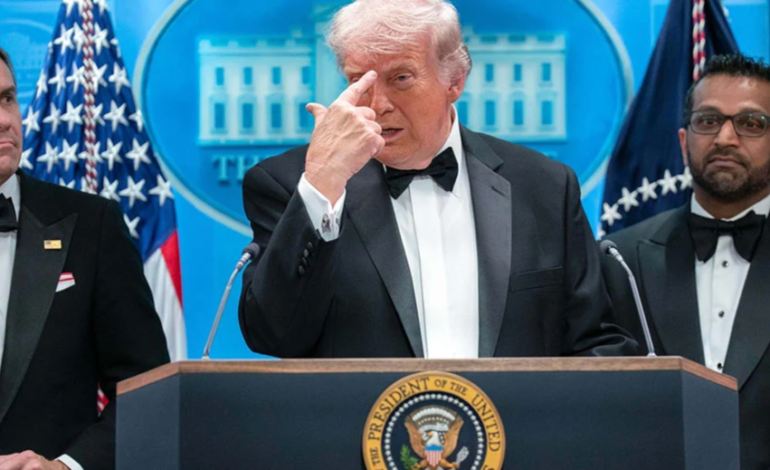
Speaking at a Forum Club event in Palm Beach, Trump described an increasingly congested maritime corridor, with hundreds of vessels crowding key shipping lanes. He said US naval operations had effectively tightened control over the route, contributing to a buildup of oil tankers waiting for clearance.
According to Trump, several ships loaded with crude oil are currently unable to exit the strait, creating bottlenecks that could ripple across global energy markets. He also indicated that some shipments are being rerouted, including toward US ports, as companies attempt to navigate the uncertainty.
Despite the disruption, Trump expressed confidence in overall supply levels, noting that the United States is producing record amounts of oil and gas. He suggested that once the congestion eases, oil prices could fall sharply due to abundant supply.
At the same time, Trump acknowledged the unpredictability of conflict-driven markets. He reiterated that US actions are aimed at limiting Iran’s economic capabilities, particularly its energy exports, which he claimed are under severe pressure.
The President also pointed to the broader economic dimension of military operations, arguing that strategic actions have yielded financial benefits for the US. However, he conceded that ongoing negotiations and the uncertain trajectory of the conflict leave room for volatility.
The situation is being closely monitored by global markets, as any sustained disruption in the Strait of Hormuz could tighten supply chains and push up energy prices. For countries like India, which rely heavily on crude imports from the Gulf, prolonged instability could lead to higher import costs, increased freight charges, and inflationary pressures.